The San Diego-La Jolla Underwater Park & Ecological Reserve
The La Jolla Underwater Park, officially the San Diego-La Jolla Underwater Park, is a 6,000-acre marine protected area established by the City of San Diego in 1970, covering everything from the sea lion rocks at La Jolla Cove to the research waters off Scripps Pier. Entry is free, the sea life is dense because most of it is a no-take zone, and the best snorkeling in Southern California happens inside its buoy lines. This page maps the zones, the rules, the entry points and the areas actually worth your fins.

Quick answer
The San Diego-La Jolla Underwater Park is a 6,000-acre protected marine area created in 1970, split into two zones: the Ecological Reserve off La Jolla Cove, where nothing may be taken, and the Marine Life Refuge to the north, used for research by Scripps Institution of Oceanography. There is no ticket and no fee; you walk in from the beach. The easiest entry is the calm, shallow water at La Jolla Cove, the same launch point used for La Jolla Cove snorkeling trips, and the second entry at La Jolla Shores puts you with the summer leopard sharks.
Key takeaways
- 6,000 acres, established 1970, free to enter, no ticket for snorkelers, divers or kayakers
- The Ecological Reserve zone is no-take: no fishing, no collecting, not even a shell, enforced by the California Department of Fish and Wildlife
- Four habitats inside the park: rocky reef, kelp forest, sand flats and two submarine canyons that plunge several hundred feet just offshore
- Best snorkel entry is La Jolla Cove, shallow and usually wave-free; a guided reserve snorkel covers the richest reef and kelp in 1.5 hours
- The park's cliff edge holds the seven La Jolla sea caves, and its Shores shallows host the summer shark aggregation where you can swim with leopard sharks
Tours Inside the Underwater Park
Every snorkel and kayak trip in La Jolla operates inside the park's boundaries; that is where the animals are. These are the trips we compare, from a guided reef snorkel to a budget rental for exploring the reserve on your own clock.
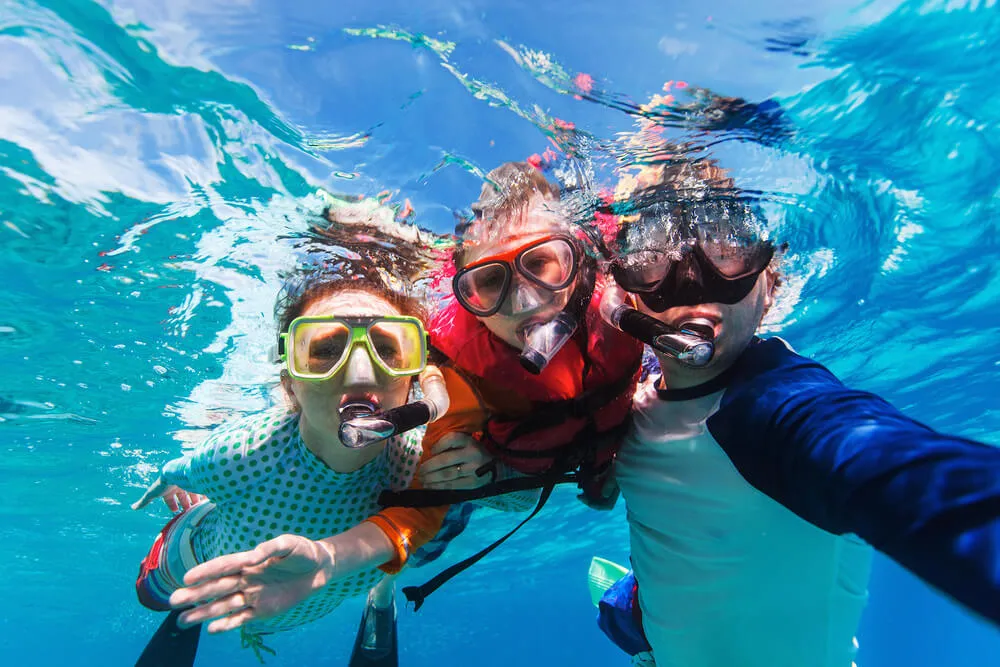 from $90
La Jolla Cove Guided Snorkeling Tour
A guided open-ocean snorkel from the beach at La Jolla Cove, swimming with sea lions, seals and colorful fish past the sea caves. Wetsuit and all gear included…
- Swim with sea lions & seals
- Sea caves & cliffs
- Garibaldi, rays & lobster
- Small group (max 8)
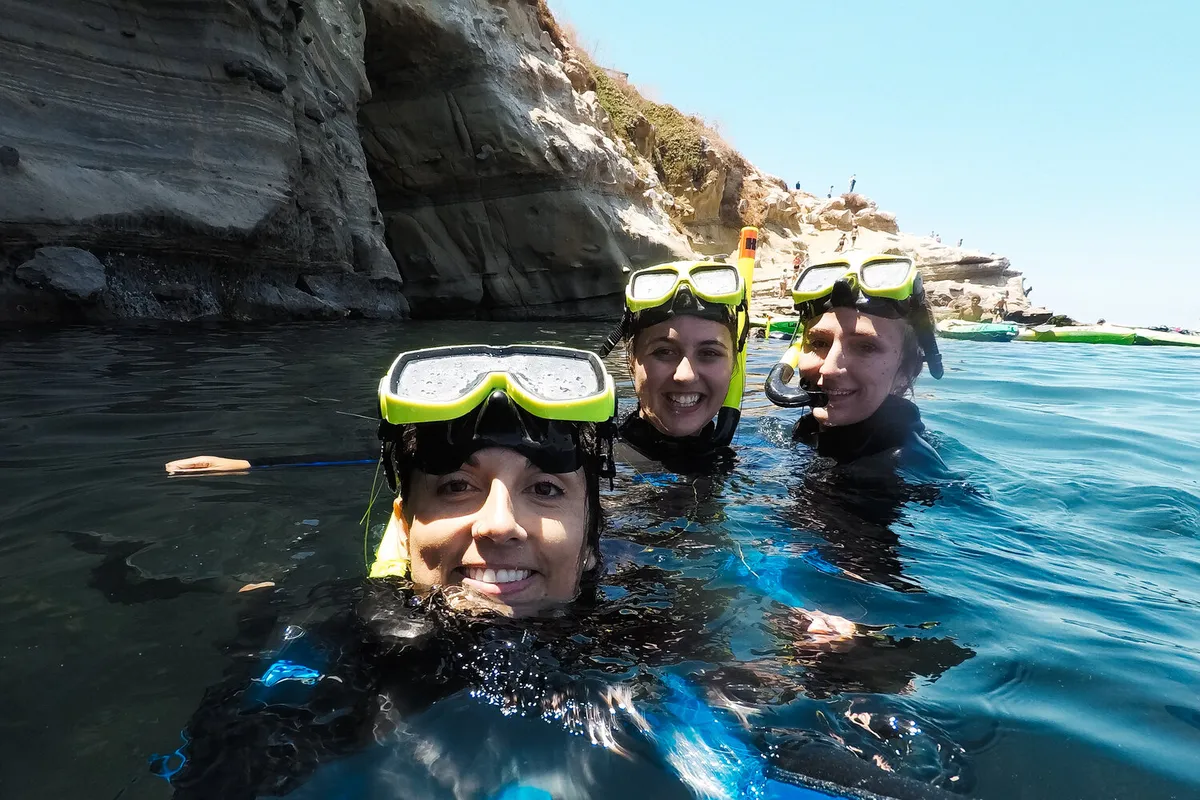 from $129
La Jolla Kayak & Snorkel Tour (2.5 Hours)
Paddle to the La Jolla sea caves, then snorkel the Ecological Reserve for leopard sharks, garibaldi and rays. Wetsuit and gear are included and yours to keep for…
- Kayak to the sea caves
- Snorkel the Ecological Reserve
- Leopard sharks & garibaldi
- Gear kept all day
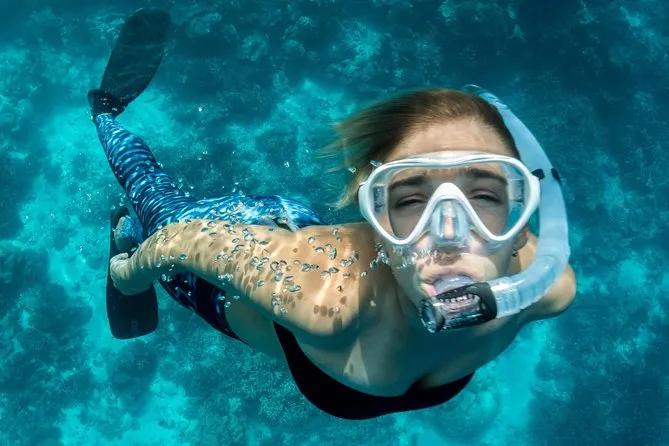 from $30
All-Day Snorkel Package with Wetsuit Rental
An all-day mask, snorkel, fins and wetsuit rental near La Jolla Cove, with free lockers. Snorkel the protected reserve at your own pace — the budget-friendly, self-guided option.
- All-day gear rental
- Wetsuit included
- Free lockers
- Self-guided & budget-friendly
What the La Jolla Underwater Park Is
A City Park That Happens to Be Underwater
The City of San Diego created the park in 1970 to protect the marine life packed into this corner of the coast, and the full official name, San Diego-La Jolla Underwater Park, reflects that city ownership. The 6,000 acres run from the rocks of La Jolla Cove north past La Jolla Shores to the edge of Torrey Pines, taking in reef, kelp forest, sand flats and canyon heads. Since 2012, when California redrew its marine protected area network, two state designations overlay the same water: the no-take Matlahuayl State Marine Reserve on the Cove side, and the San Diego-Scripps Coastal State Marine Conservation Area off Scripps Pier.
The names have shifted over the decades; the protection has only tightened.
Why It Matters to a Snorkeler
Fifty-plus years of protection is the entire reason the snorkeling here is unlike anywhere else on this coast. Fish that would be dinner elsewhere grow old and bold inside the buoy lines, sea lions breed on the rocks, and the world's largest annual gathering of leopard sharks uses the warm shallows as a nursery. Southern California snorkeling is usually a battle with surge and empty water.
Inside the reserve, offshore reefs tame the waves and the animals outnumber the people.
The Two Zones of the Park
Ecological Reserve vs. Marine Life Refuge
The park divides into two zones with different rules, and knowing which water you are floating in matters if you ever consider dropping a line or picking anything up.
| Zone | Where It Runs | Rules |
|---|---|---|
| Ecological Reserve (Matlahuayl State Marine Reserve) | La Jolla Cove to roughly midway down La Jolla Shores, including the sea caves; about 533 acres marked by buoys | Absolute no-take: no fishing, no collecting, no surfing or boogie boarding; look but never take |
| Marine Life Refuge (San Diego-Scripps Coastal SMCA) | North from the Shores past Scripps Pier toward Torrey Pines | Research area; surfing allowed; only take permitted is recreational hook-and-line fishing for coastal pelagics like sardines, anchovies and mackerel |
The Ecological Reserve
The reserve is where visitors spend nearly all their time: the 533 buoy-marked acres between the Cove and mid-Shores hold the rocky reefs, the kelp beds, the sea cave cliff line and the clearest water. This is Matlahuayl on state maps, a name drawn from the area's Native American heritage. Nothing may be taken here, living or not, a rule that covers plants, animals and inanimate objects down to the shell on the sand.
The one thing you are encouraged to remove is trash.
The Marine Life Refuge
North of the reserve, the refuge wraps the water around Scripps Pier and serves the Scripps Institution of Oceanography as a living laboratory. Surfing is allowed on this side, and fishing is far more limited than most people assume: state rules permit only recreational hook-and-line fishing for coastal pelagic species, sardines, anchovies and mackerel, with market squid excluded. Just north of the pier, the Dike Rock tide pools offer some of La Jolla's best low-tide exploring, with looser rules but the same leave-it-as-found ethic.
The Geography: Reefs, Kelp, Sand and Canyons
Four Habitats in One Park
The park owes its density of life to variety: rocky reefs, kelp beds, sand flats and submarine canyons all meet within a swimmable distance. Two of those reefs are artificial, built to create habitat, one near Black's Beach and one near Scripps Canyon, both outside the reserve proper. The offshore reef line is also why waves usually break gently at La Jolla Shores, making it the calmest kayak, paddleboard and learn-to-surf launch in San Diego, and why visibility inside the reserve reaches up to 30 feet on good days, exceptional for Southern California.
The Canyons
Two submarine canyons, Scripps Canyon and La Jolla Canyon, cut into the shelf just offshore and rank among the most studied submarine canyons in the world. From the beach, a shallow sand flat slides gradually seaward and then simply ends: accounts put the drop at roughly 500 feet, with one describing the plunge as 600 feet, into cold, nutrient-rich darkness. That wall of deep water so close to shore is what feeds everything else, pulling squid runs in winter, feeding the leopard sharks' night forays, and drawing migrating gray whales close enough to spot from the cliffs between December and March.
The Kelp Forest and Turtle Town
Swim out from La Jolla Cove and the reef gives way to a forest of California giant kelp, with strands growing up to 100 feet tall in the deeper water. Snorkelers cruise the canopy while divers work the trunks below. One named site inside the reserve, Turtle Town, earns its name from green sea turtles that feed on red kelp there, one of the few reliable turtle spots on the Southern California coast.
Rules of the Underwater Park
What Is and Is Not Allowed
Inside the Ecological Reserve: no fishing of any kind, no spearfishing, no collecting shells, rocks or anything else, no surfing or boogie boarding, and no disturbing wildlife, which includes touching or chasing sea lions, seals, sharks and turtles. Kayaking, snorkeling, diving, swimming and paddleboarding are all welcome. In the Marine Life Refuge, add surfing and the narrow pelagic hook-and-line exception.
The California Department of Fish and Wildlife enforces the rules across both zones, and lifeguard towers at La Jolla Cove and La Jolla Shores watch the water itself. There is no fee anywhere in the park: bring your own gear or want to watch from the cliffs, and the price is zero.
Where to Enter the Water
Entry 1: La Jolla Cove
The Cove is the easiest entry in the park: a pocket of sand between rock ledges where the water is shallow and typically wave-free. Walk in, put your face down, and the reef starts immediately, with garibaldi in the rocks and sea lions commuting overhead. From here you can swim east along the cliffs toward the sea caves, passing rocky reef and the kelp edge.
Steps lead down from Coast Boulevard, lifeguards watch the beach, and the guided small-group snorkel launches from this side for exactly these reasons.
Entry 2: La Jolla Shores at the Marine Room
The southern end of La Jolla Shores beach, reached by the public access on the south side of the Marine Room restaurant, drops you onto the sand flat where the leopard sharks gather in summer. Swim south from here and you reach Devil's Slide, a shallow reef in front of a small crescent of rocky beach near the seventh sea cave, a favorite snorkel target. This entry suits anyone nervous about depth, since the sand stays shallow a long way out, and it is the launch zone for the kayak fleets working the caves.
Which Entry for Which Person
Choose the Cove for reef, kelp, sea lions and the classic reserve snorkel; choose the Shores for sharks, rays, easy wading and kayak launches. They sit five minutes apart by car, close enough to do both in a morning. Rent once and carry your gear: the $30 all-day package with wetsuit and free lockers covers both entries on one rental.
What You Will See
The Reliable Cast
Orange garibaldi, California's state fish, are impossible to miss against the dark reef, visible even from the cliffs above. California sea lions and harbor seals are guaranteed at the Cove, in the water and hauled out on the rocks, loud and entirely at home. Leopard sharks patrol the Shores sand flats in season, alongside bat rays, round stingrays and shovelnose guitarfish.
In the kelp and reef, look for kelp bass, sheephead, rock wrasse, California spiny lobster, two-spotted octopus, moray eels tucked in crevices, and horn sharks resting under ledges.
The Seasonal Show
Winter brings market squid to the canyon edges to spawn, laying what looks like a football field of white egg cases on the bottom, and pushes gray and humpback whales past the canyon mouth about a mile offshore, best watched from high ground like Mount Soledad. Late spring fills the rocks with seal pups. Summer through fall is peak season underwater: the warmest water, the leopard shark aggregation, and the best visibility.
Green sea turtles graze Turtle Town year-round, and the occasional dolphin pod or freak visitor, a hammerhead was spotted some years back, keeps every swim honest.
Best Snorkel Areas in the Park
Ranked by Payoff
Four areas cover nearly everything the reserve does well.
| Area | What It Delivers | Skill Level |
|---|---|---|
| La Jolla Cove reef and kelp edge | Garibaldi, sea lions, lobster, the classic reserve snorkel | Beginner and up |
| Sea cave cliff line | Cave mouths, sea lions on ledges, dramatic rock | Confident swimmers; calm days |
| Marine Room shallows | Leopard sharks, rays, guitarfish in waist-deep water, June to December | Anyone who can wade |
| Devil's Slide reef | Quieter reef near the seventh cave, south of the Shores | Intermediate; longer swim |
Seeing the Park From Dry Land
Five Free Vantage Points
The park shows itself surprisingly well from shore. The boardwalk and benches above La Jolla Cove look out over the whole Ecological Reserve, and on flat days the water is clear enough to watch garibaldi from above. The Coast Walk Trail between The Cave Store and La Jolla Shores runs the clifftop over the sea caves, with kayak traffic and kelp below.
Goldfish Point, near The Cave Store, is named for the garibaldi visible in the water from its overlook, and Clam's Cave opens through the rock directly beneath it. La Jolla Shores beach gives a long, walkable edge onto the reserve toward Scripps Pier. And Birch Aquarium at Scripps, up the hill, tanks the same species you would meet in the park, with leopard sharks on display year-round.
THE MAP at Kellogg Park
At Kellogg Park, steps from the sand, THE MAP of the Grand Canyons of La Jolla Educational Plaza lays the park's bathymetry under your feet: a 2,400-square-foot LithoMosaic, billed as the largest in the world, depicting La Jolla Canyon and more than 100 local marine species along with dive sites and surf spots. It was dedicated on October 19, 2020, what would have been the 103rd birthday of Scripps oceanographer Walter Munk, whose foundation built it with Friends of La Jolla Shores. Stand on the canyon rim in dry sneakers before you snorkel the real one; it is the best free orientation to the park there is.
Guided or On Your Own?
How to Choose
The park has no gate, so the question is purely about efficiency and confidence. A guide takes you to the productive reef on the first swim rather than the third, reads the surge before you feel it, and narrates what you are looking at; the 1.5-hour guided reserve snorkel does this for $90 in groups of eight or fewer with wetsuit included. The 2.5-hour kayak and snorkel combination covers the most park per morning, pairing the cave cliffs with a reef snorkel for $129 per group of up to two.
Going alone is completely legitimate here: rent gear on Avenida de la Playa, enter at the Cove or the Shores, and ask a lifeguard about conditions before you swim. Fins are advised for the reserve, and a wetsuit adds warmth and buoyancy for longer swims.
A Realistic Day in the Park
Start at Kellogg Park at 8 AM and read THE MAP with a coffee. Wade in at the Marine Room by 8:30 for 45 minutes over the leopard sharks. Drive around the point, park in the garage near the village, and snorkel the Cove reef and kelp edge before the midday breeze.
Lunch on Avenida de la Playa, then a 2 PM stroll down the Coast Walk Trail to watch the kayaks work the sea caves you swam past. One free park, four habitats, and you never showed a ticket to anyone.
Scuba Diving in the Underwater Park
Below Snorkel Depth
Divers get the layers snorkelers only look down on: the kelp trunks with sheephead and lobster working the holdfasts, the rocky reef ledges where horn sharks and octopus hide, and the canyon rims where the bottom tips over into blue-black water. The Cove side offers the classic reserve dive over reef and kelp in 15 to 40 feet, while the Shores side is the shore-entry route to the canyon edges, a favorite of local night divers during the winter squid runs. The same no-take rules apply on scuba as on snorkel, spearguns included, and there is still no fee: certified divers simply walk in from either beach.
Dive shops in the village and along Avenida de la Playa fill tanks and rent full kits, and conditions questions go to the lifeguard towers, which log visibility and surge daily.
La Jolla Underwater Park Map
The park runs from La Jolla Cove north past Scripps Pier. Buoys mark the no-take Ecological Reserve between the Cove and mid-Shores; both beach entries are free.
La Jolla Underwater Park: Frequently Asked Questions
What is San Diego La Jolla Underwater Park?
A 6,000-acre marine protected area created by the City of San Diego in 1970, stretching from La Jolla Cove past La Jolla Shores toward Torrey Pines. It divides into a no-take Ecological Reserve, where most snorkeling happens, and a Marine Life Refuge used for research by Scripps Institution of Oceanography. Entry is free from either beach.
Is snorkeling in La Jolla worth it?
Yes, and the underwater park is the reason. Decades of no-take protection have filled the reserve with garibaldi, sea lions, leopard sharks, rays and kelp forest at densities you will not find elsewhere in Southern California, in visibility that reaches 30 feet on good days. A guided snorkel through the reserve puts you over the best reef in one 1.5-hour session.
How much does it cost to go to the La Jolla underwater park?
Nothing. There is no ticket, no gate and no fee for swimming, snorkeling, diving, kayaking or paddleboarding in the park. You pay only for what you choose to add: gear rental from about $30 for a full day with wetsuit, a guided snorkel at $90, or a kayak and snorkel tour at $129 per group of up to two.
Can you still swim at La Jolla Cove?
Yes. Swimming is allowed and popular at La Jolla Cove year-round; the no-take rules ban fishing and collecting, not people. Lifeguards staff the beach, the water is usually calm thanks to the protecting reef and rock, and open-water swimmers train here daily. Give the sea lions space on the rocks and in the water and you are welcome.
How deep is the La Jolla underwater park?
It ranges from ankle-deep sand flats to submarine canyons several hundred feet down. Accounts put the canyon drop at roughly 500 feet, one says 600, with La Jolla Canyon eventually reaching far deeper offshore. Snorkelers stay over the 10 to 30 foot reef and kelp zones; the canyon rims are diver territory.
Where do you enter the La Jolla underwater park?
Two beach entries: La Jolla Cove, the easiest, with shallow, usually wave-free water straight onto the reef, and La Jolla Shores at the access beside the Marine Room restaurant, which opens onto the sand flats and the summer leopard shark zone. Both are free, and lifeguard towers watch both beaches.
Can you take shells from La Jolla?
Not from the Ecological Reserve. The no-take rule covers every marine resource, living or not, shells and rocks included, and the California Department of Fish and Wildlife enforces it. Leave everything as found; the only thing you are encouraged to carry out is trash.
Is fishing allowed in the La Jolla underwater park?
Not in the Ecological Reserve, where all fishing is banned. In the Marine Life Refuge off Scripps, the only take allowed is recreational hook-and-line fishing for coastal pelagic species such as sardines, anchovies and mackerel. Check current California Department of Fish and Wildlife regulations before fishing anywhere near the boundaries.
Are there sea turtles in the La Jolla underwater park?
Yes. Green sea turtles feed on red kelp at a reserve site nicknamed Turtle Town, one of the few dependable turtle areas on this coast. Sightings are a bonus rather than a guarantee, and your odds rise on calm days over the kelp with a guide who knows the site.
When is the best time to visit the underwater park?
Summer through early fall for snorkeling: the warmest water, the leopard shark aggregation at the Shores, and the most reliable visibility. Mornings beat afternoons year-round, before wind chops the surface. Winter trades warm water for squid runs, seal pups in spring, and gray whales passing the canyon offshore.
The underwater park is what this whole coastline would look like if nobody had ever fished it, and it costs nothing to see. Stand on THE MAP at Kellogg Park, pick your entry, and give it one calm morning; the reserve has a way of turning a quick snorkel into the reason you come back to San Diego.