Leopard Sharks in La Jolla: Season, Spot and How to Swim With Them
The leopard sharks La Jolla is famous for gather every summer in the warm shallows at the south end of La Jolla Shores beach, hundreds of them, most between four and five feet long, in water often no deeper than your waist. This is the largest annual aggregation of leopard sharks in the world, it happens a short swim from a public beach, and the sharks are harmless. This page covers exactly when they arrive, the precise stretch of sand to enter from, and how to snorkel with them on your own or with a guide.
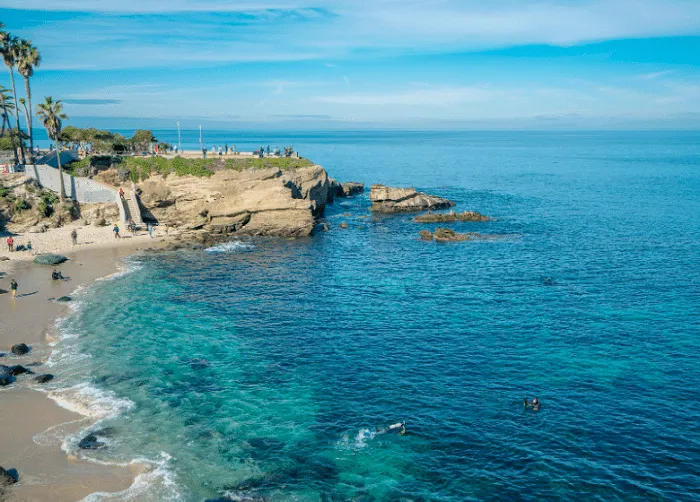
Quick answer
Leopard sharks show up at La Jolla Shores from around June through December, with peak numbers in August and September. The reliable spot is the shallow water directly in front of the Marine Room restaurant at 2000 Spindrift Drive, at the far south end of the beach, where the sharks cruise in roughly 4 to 5 feet of water. They are docile bottom feeders with small, downward-facing mouths and pose no danger to swimmers. A mask and calm floating are all it takes, though La Jolla Cove Snorkeling tours with wetsuits and guides make the first time much easier.
Key takeaways
- Season roughly June through December, peaking in August and September when the water is warmest
- Best spot: the shallows off the Marine Room restaurant, reached by walking south from Kellogg Park or via the beach-access alley beside the restaurant
- Nearly all the sharks are pregnant females using the warm, shallow water to speed up a 10 to 11 month gestation
- Harmless to people: 4 to 5 foot bottom feeders that eat clams, crabs and fish eggs, and a guided snorkel with gear included gets you among them in one morning
- The shallows sit inside a no-take marine reserve, the same protected water that carved the seven sea caves of La Jolla into the cliffs next door
Snorkel Tours That See the Leopard Sharks
In season, every guided snorkel in the reserve builds its route around the sharks. These are the options we compare: a guided swim with all gear included, a kayak-plus-snorkel combination, and a cheap all-day rental if you would rather find the sharks yourself.
 from $90
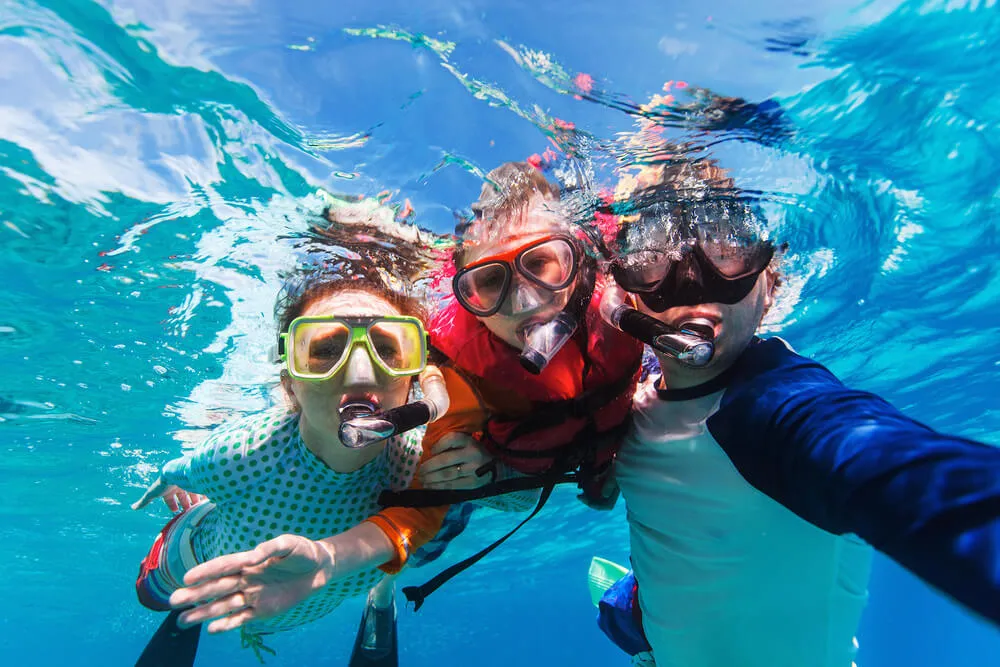
La Jolla Cove Guided Snorkeling Tour
A guided open-ocean snorkel from the beach at La Jolla Cove, swimming with sea lions, seals and colorful fish past the sea caves. Wetsuit and all gear included…
- Swim with sea lions & seals
- Sea caves & cliffs
- Garibaldi, rays & lobster
- Small group (max 8)
 from $129
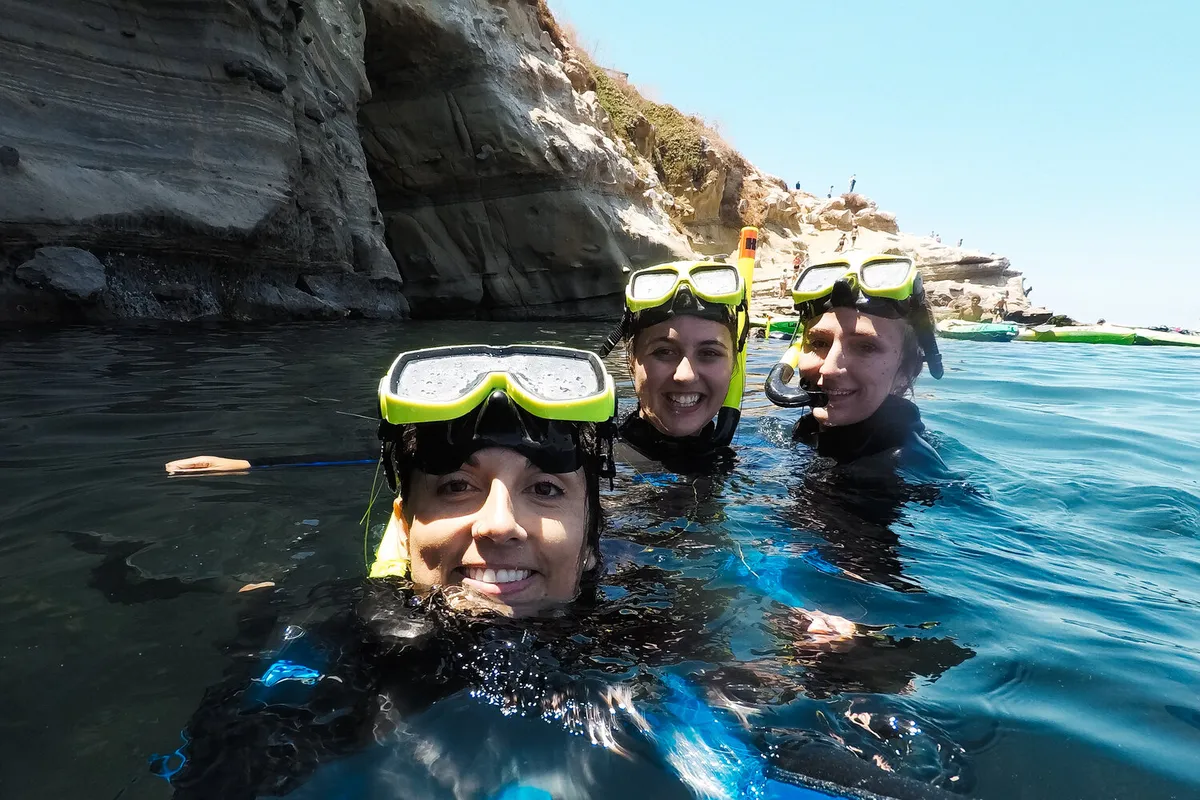
La Jolla Kayak & Snorkel Tour (2.5 Hours)
Paddle to the La Jolla sea caves, then snorkel the Ecological Reserve for leopard sharks, garibaldi and rays. Wetsuit and gear are included and yours to keep for…
- Kayak to the sea caves
- Snorkel the Ecological Reserve
- Leopard sharks & garibaldi
- Gear kept all day
 from $30
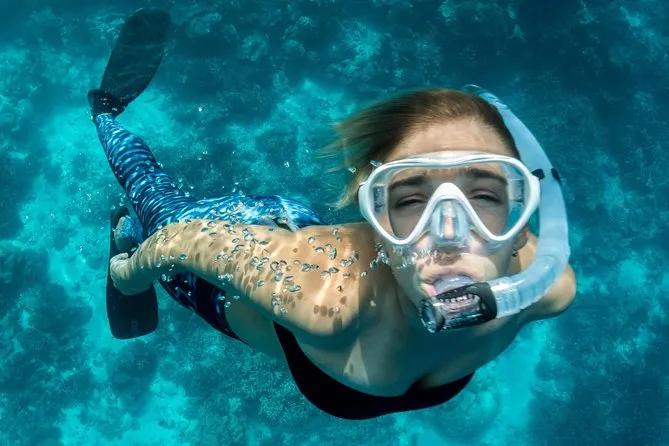
All-Day Snorkel Package with Wetsuit Rental
An all-day mask, snorkel, fins and wetsuit rental near La Jolla Cove, with free lockers. Snorkel the protected reserve at your own pace — the budget-friendly, self-guided option.
- All-day gear rental
- Wetsuit included
- Free lockers
- Self-guided & budget-friendly
Why Leopard Sharks Gather in La Jolla
A Natural Nursery
Almost every shark in the aggregation is a pregnant female. Leopard sharks are cold-blooded, and the sun-warmed shallows at the south end of La Jolla Shores raise their body temperature, which researchers believe shortens their 10 to 11 month gestation. The calm, protected water also keeps larger predators away.
So the beach works as a maternity ward: warm, shallow, safe, and stocked with food.
The Canyon Next Door
Just offshore, the La Jolla Submarine Canyon drops away into deep, nutrient-rich water. The sharks rest in the shallows through the day, then make short trips to feed on squid, crabs and fish eggs at night. Very few coastlines put a deep canyon this close to a warm sand flat, which is why the world's largest annual leopard shark gathering happens here and not somewhere else on their range, which runs along the Pacific coast from Washington down to Mazatlan, Mexico.
Protected Since 1929
The viewing area sits inside the Matlahuayl State Marine Reserve, part of the 6,000-acre underwater park, and these waters have carried some form of protection since 1929. No fishing, no collecting, no take of any kind. Decades of that protection are why hundreds of large sharks feel safe enough to stack up in knee-deep water next to swimmers every summer.
When to See Leopard Sharks in La Jolla
Month by Month
Sources agree on the peak and differ slightly on the edges of the season, so treat the shoulder months as a maybe.
| Months | What to Expect |
|---|---|
| January to May | Occasional stragglers only; some sharks linger year-round but sightings are luck |
| June to July | Season builds; sharks arrive as the shallows warm, sightings become regular |
| August to September | Peak. Warmest water of the year, highest shark counts, the safe bet for a trip |
| October to November | Numbers taper but remain good on warm, calm days |
| December | Tail end of the season; most sources call it over by early December |
Where Sources Disagree
Most local guides put the season at June to December with an August and September peak. One local outfitter describes the migration as June to September for mating season, with some sharks staying year-round, and San Diego's tourism board frames it as spring into summer. The practical read: August and September are near-certain, June through November are good, and anything outside that window is a bonus sighting, not a plan.
Best Time of Day and Tide
Go early in the morning. The water is calmer, visibility is better before the wind picks up, and the beach is emptier. Aim for a low tide during small surf: lower tides mean less wave action stirring sand into the water, and sand in suspension is the main thing that hides the sharks.
A clear, sunny morning with low tide and low surf is the perfect ticket. Afternoon visits fail often enough that lifeguards describe shark viewing as having good days and bad days; mornings stack the good ones.
Exactly Where to Find Them
The Marine Room Shallows
The sharks can appear anywhere along La Jolla Shores, but the reliable zone is directly off the Marine Room restaurant at 2000 Spindrift Drive, at the extreme south end of the beach. The bottom stays shallow a long way out here, which is exactly why the sharks like it. On a normal day they cruise just beyond the small shore break in about 4 to 5 feet of water, sometimes 4 to 8 feet, and on very calm days even shallower, close enough that waders standing chest-deep watch their shadows pass.
Two Ways In
From Kellogg Park, the main La Jolla Shores lot, walk south along the sand about ten minutes to the Marine Room and swim out in front of it; you get the park's restrooms and freshwater showers as a bonus. The more direct route is the small public beach-access alley on the south side of the Marine Room parking lot off Spindrift Drive, which drops you onto the sand exactly where you want to enter. One catch with the alley: at high tide the water can reach the buildings and leave no dry beach, so check the tide before choosing it.
Finding the Sharks Once You Are Wet
Swim straight out from the restaurant until you are in 4 to 5 feet of depth, then work parallel to the beach along that depth line, left and right, until shapes appear. If you swim too far out into deeper water you will pass over their heads and miss them. Visibility is often best right where slightly deeper water starts to clear; snorkelers regularly report the sharks were easiest to see just past the murky inshore band.
Float still and they come to you; chase them and they melt away.
Are Leopard Sharks Dangerous?
Why They Are Harmless
No. Leopard sharks are shy, slow-moving bottom feeders. Their small mouths face downward and work by suction, built for pulling clams, shrimp, crabs and fish eggs out of the sand, not for biting anything your size. Most animals in the aggregation run four to five feet long; one snorkeling guide caps the species at about 4.9 feet while other local sources say they can reach six, and either way the mouth stays tiny.
Swimmers, including kids, share this water with hundreds of them every summer season after season.
Each Shark Wears Its Own Pattern
The dark saddle-like bars and spots over a gray-brown body are unique to each individual, the way fingerprints are, and researchers use the patterns to identify particular sharks across seasons. In the water the pattern is what you see first, a chain of dark saddles gliding over pale sand, unmistakable even at low visibility.
How to Snorkel With the Leopard Sharks
Gear
The genuinely required kit is a mask, or even swim goggles, since the sharks sit in water shallow enough to stand in. A snorkel keeps your face down longer, fins help you hold position without splashing, and a wetsuit is the comfort call: the water runs about 68 to 72 degrees Fahrenheit in season, roughly 20 to 22 Celsius, fine for a quick dip and chilly for a 45-minute float. A UV swim shirt earns its keep in the shallow, sun-blasted water if you skip the wetsuit.
The all-day rental package covers mask, snorkel, fins and wetsuit for $30 with free lockers.
Technique
Float. That is the whole technique. Stay calm and still on the surface and the sharks treat you as scenery, passing within arm's reach on their own schedule.
Vigorous kicking, splashing or lunging toward them empties the area in seconds. Never touch or chase a shark; beyond ruining the encounter, disturbing wildlife inside a State Marine Reserve is illegal. Keep your fins up off the sand so you neither stir the visibility nor land on a resting ray.
Can Kids and Weak Swimmers Do This?
Yes, and it is one of the best family wildlife encounters in Southern California precisely because most sharks hold in waist-deep water. Non-swimmers should still be comfortable floating or wading in small surf, and guided tours can provide flotation. Lifeguards staff La Jolla Shores, but the shark zone sits at the far south end of the beach, away from the main towers, so keep your own group in sight rather than counting on being watched.
Guided Tour or On Your Own?
What a Guide Changes
Confident snorkelers genuinely do not need a guide here: walk south from Kellogg Park, swim out, find the depth line. A tour earns its price if you want gear, judgment and marine biology included. Guided leopard shark snorkels run about 60 to 90 minutes in the water with wetsuit, mask, snorkel and fins provided, guides who know exactly where the animals held yesterday, and commentary on what you are watching.
The small-group guided snorkel runs $90 with a maximum of eight guests, and local operators run Shores snorkel tours roughly June through October, typically departing 10:30 AM and 1:30 PM. Birch Aquarium at Scripps also runs seasonal guided shark snorkels, roughly July through September, and keeps leopard sharks on display year-round if your trip misses the season.
The Kayak Angle
From a kayak or paddleboard you spot the sharks as shadowy outlines against the sand below, a genuine thrill on a clear day and a good option for anyone unwilling to get fully in the water. The kayak and snorkel combination does both in one 2.5-hour trip, paddling the sea cave cliffs first and then snorkeling the reserve where the sharks and garibaldi are, with the gear staying with you for the rest of the day.
Rules of the Reserve
Look, Do Not Touch
The shark shallows sit inside the Matlahuayl State Marine Reserve, and the rule is complete: it is unlawful to injure, damage, take or possess any living, geological or cultural marine resource. That covers the sharks, the rays, the sand dollars, and the pretty shell by your foot. No fishing of any kind in the reserve.
Leave everything as found, with one exception: carrying out trash, including micro trash, is encouraged. The California Department of Fish and Wildlife enforces these rules, and fines are real.
Parking and Practical Logistics
Where to Park
The Kellogg Park lot at La Jolla Shores is free and closest to the sand, and it fills brutally early in summer: arrive by about 8 AM on weekends, 9 AM on weekdays, or circle in vain. Street parking hides in the neighborhood along El Paseo Grande and nearby blocks, with time limits and permit zones worth reading twice. On summer weekends a rideshare drop at Kellogg Park or near the Marine Room often beats driving entirely.
Limited street parking also exists on Spindrift Drive near the Marine Room alley access.
A Realistic Shark Morning
Park at Kellogg Park at 8 AM, walk ten minutes south along the water line, wade in beside the Marine Room at low tide, and float over the first sharks within minutes of reaching chest depth. Forty-five minutes with the aggregation, a slow walk back with the sun coming up over the village, freshwater shower at the park, and you are drying off before the beach crowd arrives at 10. Add a second act by driving five minutes around the point for snorkeling at the Cove with the sea lions, or walk the Coast Walk Trail above the cliffs to see where the reserve's sea caves cut in.
What Else You Will See in the Shallows
The Supporting Cast
The same sand flat carries round stingrays, bat rays, and shovelnose guitarfish, a ray that looks like a flattened shark and startles first-timers more than the actual sharks do. Bright orange garibaldi, California's state fish, hold closer to the rocky edges of the reserve, and sea lions and harbor seals commute past from their haul-outs by the Cove. Dolphins pass offshore often enough to be a realistic hope.
In winter the deep canyon brings gray whales within sight of the beach, a different show for the off-season.
Leopard Shark Quick Facts
The Species at a Glance
Everything a first-time snorkeler actually needs to know about the animal, compressed.
| Detail | Leopard Sharks at La Jolla |
|---|---|
| Typical size | 4 to 5 feet; maximum reports range from about 4.9 to 6 feet |
| Season | June to December, peak August and September |
| Who they are | Nearly all pregnant females warming through a 10 to 11 month gestation |
| Diet | Clams, shrimp, crabs, fish eggs, suctioned off the sand |
| Danger to people | None; small downward mouths, shy temperament |
| Depth they hold | 4 to 5 feet, out to about 8 feet on rougher days |
| Water temperature | About 68 to 72 F, roughly 20 to 22 C, in season |
| Range | Pacific coast from Washington to Mazatlan, Mexico |
Leopard Shark Viewing Map
The shark zone is the shallow water off the Marine Room at the south end of La Jolla Shores. Park at Kellogg Park and walk south, or use the beach-access alley beside the restaurant.
La Jolla Leopard Sharks: Frequently Asked Questions
When can you see leopard sharks in La Jolla?
Roughly June through December, with the peak in August and September when the water is warmest and shark numbers highest. Some sharks linger year-round, but outside the season a sighting is luck rather than a plan. Go on a calm, sunny morning at low tide for the best conditions.
Are leopard sharks aggressive?
No. They are shy, slow-moving bottom feeders with small downward-facing mouths built for suctioning clams, crabs and fish eggs off the sand. They avoid splashy swimmers and have no interest in people. Families snorkel with hundreds of them every summer, and the actual hazard in this water is stepping on a stingray, which the stingray shuffle prevents.
Is it safe to swim in La Jolla Cove?
Yes, La Jolla Cove is one of the calmest ocean swims in San Diego, protected from most swell and watched by lifeguards. The leopard sharks mostly hold a mile away at La Jolla Shores, while the Cove side offers sea lions, garibaldi and the kelp edge. A guided swim through the Cove handles conditions, gear and route in one 1.5-hour session.
How common are sharks in La Jolla?
In season, extremely: hundreds of leopard sharks pack the Marine Room shallows in the largest annual aggregation of the species in the world. Dangerous sharks are a different story; the protected, shallow reserve is not a place large predatory sharks frequent, and decades of daily swimmers, snorkelers and kayakers here speak for themselves.
How deep is the water where the leopard sharks are?
Usually 4 to 5 feet, occasionally out to about 8 feet, and on very calm days the sharks push into water shallow enough to wade. That is the trick to finding them: swim out to roughly chest depth in front of the Marine Room and patrol along that depth line rather than heading further out to sea.
Do you need a wetsuit to snorkel with the leopard sharks?
Not strictly. Summer water runs about 68 to 72 degrees Fahrenheit, manageable in just a swimsuit for a short float, chilly after half an hour. A wetsuit makes the session comfortable, and the $30 all-day rental includes one along with mask, snorkel and fins.
Can kids swim with the leopard sharks in La Jolla?
Yes, this is a popular family activity because the sharks hold in waist-deep water over sand. Kids should be comfortable in small surf, wear a properly fitting mask, and understand the two rules: no chasing or touching the animals, and shuffle feet on the way in and out to warn off stingrays.
Where do you park to see the La Jolla leopard sharks?
Kellogg Park at La Jolla Shores is the free lot closest to the beach; arrive by 8 AM on summer weekends or 9 AM on weekdays. Otherwise hunt street parking around El Paseo Grande, park near Spindrift Drive by the Marine Room alley, or take a rideshare and skip the problem.
Can you see the leopard sharks without getting in the water?
Sometimes. From a kayak or paddleboard their outlines show clearly against the pale sand on clear days, and waders standing chest-deep watch them pass. From dry sand you will mostly see nothing. If you want a guaranteed look without the ocean, Birch Aquarium at Scripps keeps leopard sharks on display year-round.
Is fishing for leopard sharks allowed in La Jolla?
Not in the aggregation area. The shallows sit inside the Matlahuayl State Marine Reserve, a no-take zone where fishing, collecting and disturbing any marine resource is illegal and enforced by the California Department of Fish and Wildlife. Anglers targeting leopard sharks legally do so outside the protected area boundaries.
Few wildlife encounters anywhere combine this much certainty with this little effort: in August and September you can park a car, walk ten minutes, wade to chest depth and float over hundreds of sharks before breakfast. Time the tide, keep your fins quiet, and let the sharks do the approaching.